Imagine stepping out your door and being at Lake Washington in minutes. If you want a quieter pocket of Seattle with real waterfront access, a small village feel, and low-maintenance living, Madison Park delivers. In this guide, you’ll learn what condo and townhome living looks like here, how prices and HOA rules work, and the key steps to buy or sell with confidence. Let’s dive in.
Madison Park at a glance
Madison Park sits on Seattle’s east side along Lake Washington, centered on Madison Park Beach and the public park at the foot of E Madison Street. The park features a bathhouse, grassy slope, swimming area, and seasonal lifeguards per the City of Seattle. You can review official details on the city’s page for Madison Park Beach and Park.
This neighborhood reads as an upscale, residential enclave with a compact “village” strip of cafés, a local grocery, and small retailers within a few blocks of the water. Most streets are single-family, with condos and townhomes clustered near the lake and along 42nd to 43rd avenues.
ZIP code note
Madison Park is generally associated with ZIP code 98112. If you see references elsewhere, confirm neighborhood context using a neutral source like this 98112 ZIP code snapshot.
Condos and townhomes you’ll find
Attached homes here typically fall into three groups:
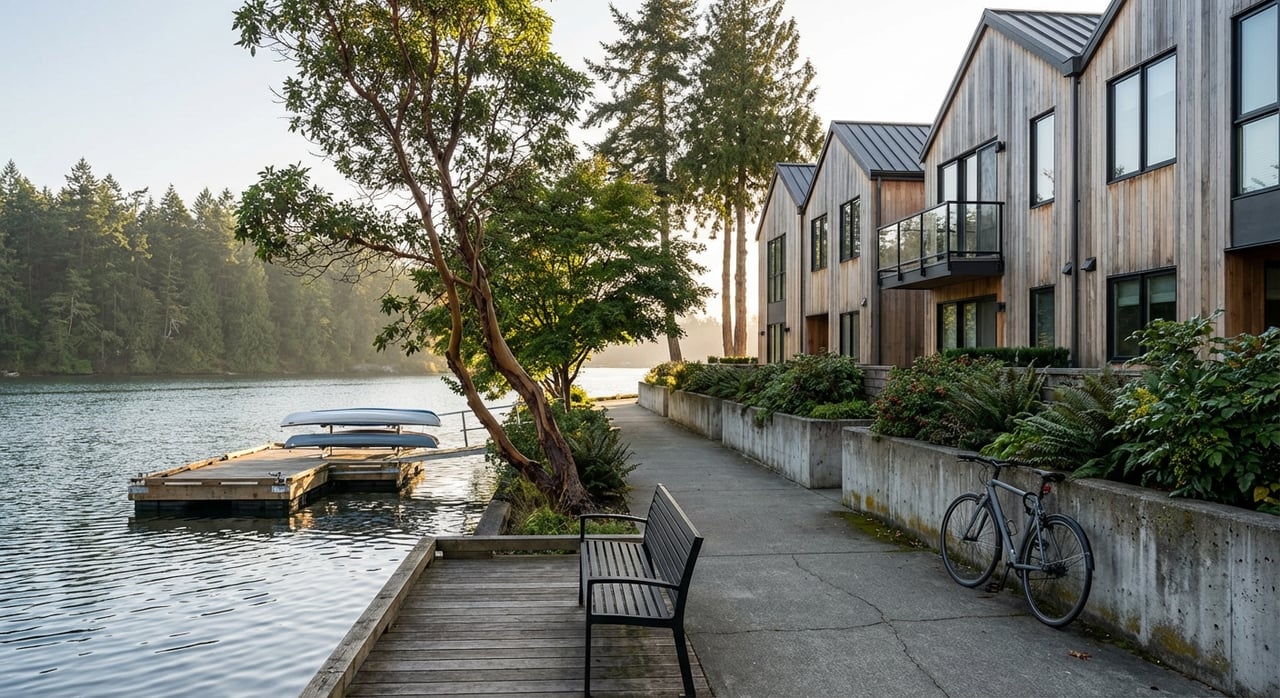
- Lakefront and near-lake low to mid-rise condos, often mid-century to contemporary, some with shared outdoor areas and lake views.
- Smaller walk-up or courtyard-style condo buildings a block or two inland.
- Multi-level townhomes, including infill from the 1990s to 2010s, often with garages, decks, and 2 to 3 bedrooms.
You’ll see 1 to 2 bedroom condo layouts, plus 2 to 3 bedroom townhomes with private entries. Named communities often mentioned by locals include Canterbury Shores, Lakeshore West, and Lakeview Lanai. Inventory is modest, so desirable units near the village and beach tend to draw attention quickly.
What waterfront living feels like
The park and beach are the heart of the neighborhood. In summer, you’ll find swimmers, paddleboards, and big-lake sunrises. The lakefront path and streets make for easy morning jogs or evening strolls. The beach is seasonally lifeguarded, subject to staffing. For beach details and hours, start with the city’s Madison Park page, and confirm current schedules as seasons change.
Village life runs a block or two up Madison Street. You can grab everyday groceries at Bert’s Red Apple and pick up coffee, flowers, or dinner close by. On warm days, expect heavier pedestrian traffic near the beach. Parking next to the park is limited, and many locals suggest arriving early or taking transit on peak summer weekends. Seasonal roundups like this look at popular beaches and parking dynamics across the city: best beaches overview.
Getting around and daily convenience
Madison Park is roughly 3 to 4 miles from downtown, the University of Washington, and SR‑520 for Eastside access. For many residents, that means straightforward drives or bus rides depending on time of day. King County Metro’s Route 11 links the neighborhood toward Capitol Hill and downtown. For a snapshot of walkability and transit connections, review Walk Score’s overview for Madison Park. Always check live schedules before quoting exact travel times.
Costs and current price context
Prices vary widely based on lake proximity, views, parking, and building condition. Within the broader Madison Park market mix, neighborhood-level sources show high single-family values alongside more accessible condo and townhome options.
- Redfin neighborhood pages (last updated December 2025 on sample pages) reflect a median sale price around 2.0 million dollars across all housing types in the area.
- Zillow’s ZIP code index for 98112 reports a ZHVI of about 1.336 million dollars as of January 31, 2026.
- Sample attached-home listings nearby show inland and waterfront condos with estimated values in the mid 600,000 to 800,000 dollar range, depending on size, age, and view.
Use these figures as dated context, not predictions. Always confirm current comps because small differences like a lake view, dock rights, or deeded parking can shift value significantly.
Why condos and townhomes appeal here
If you want the lake and village lifestyle without the yard work, a condo or townhome can be ideal. Many exterior chores shift to the HOA or a management team, which makes lock-and-leave living easier for frequent travelers and busy professionals. A good overview of low-maintenance benefits appears in this summary of condo living advantages.
What to check in an HOA
Washington condominum and HOA rules are governed by state statutes, including the Washington Uniform Common Interest Ownership Act. Buyers should become familiar with WUCIOA basics and request the association’s resale disclosures early. Focus on:
- Budget and reserve study funding levels
- Any current or proposed special assessments
- Master insurance coverage and deductibles
- Dues delinquency rates and any pending litigation
- Recent meeting minutes and capital project history
For a practical buyer framework, review the state’s condo and HOA guidance, then tailor due diligence to your specific building.
Financing a condo or townhome
Lenders often evaluate condominium projects, not only the individual unit. Conventional loans may require the building to meet secondary-market standards. It helps to confirm project eligibility early using resources like Fannie Mae’s Condo Project Manager. Factors like low reserves, pending litigation, or high investor concentration can affect loan options and terms. If you plan to finance, start lender conversations before you tour so you know which projects fit.
Insurance 101 for condo owners
Most associations carry a master policy covering the building exterior and common areas. You will still need an HO‑6 policy for your unit’s interior finishes and contents. Also verify how large deductibles are handled if there is a major claim. A quick primer on master policies and HO‑6 coverage lives here: condo master insurance explained.
Parking, storage, and privacy tradeoffs
Townhomes often provide a private entry and garage, which can feel closer to single-family living with less exterior maintenance. Mid-rise condos may trade some privacy for elevator convenience and on-site amenities. In either case, confirm parking assignments, guest parking rules, and storage availability. Near the beach, public parking is limited in summer, so having dedicated parking can be a real plus.
Buyer due diligence checklist
Before you write an offer, gather and review:
- HOA budget, reserve study, and last 12 to 24 months of meeting minutes
- CC&Rs or house rules, pet and rental policies
- Master insurance summary and association deductibles
- Any special assessments, recent capital projects, and engineering reports
- Owner-occupancy and investor concentration levels
- Parking and storage assignments, plus any dock or moorage rights if applicable
- Confirmation of project eligibility with your lender when financing
For Washington-specific expectations, use the state’s condo and HOA buyer resources as a reference.
Selling an attached home in Madison Park
Well-prepared condos and townhomes in premium neighborhoods can sell quickly when priced and presented correctly. Focus on these steps:
- Stage for natural light, view lines, and outdoor flow to patios, decks, or balconies.
- Highlight parking, storage, and any lake-facing amenities that set your unit apart.
- Use recent, hyper-local comps and account for unique premiums like views or dock access.
- Prepare a clean HOA packet up front to reduce buyer friction.
If you are weighing timing, have a strategy conversation early to plan pricing, presentation, and marketing around current demand.
Is Madison Park right for you?
Choose a condo or townhome here if you value a quiet lakeside setting, walk-to conveniences, and low-maintenance living. You will trade a larger yard for simpler upkeep and faster access to the beach and village. If that matches the way you want to live, Madison Park is a smart shortlist.
Ready to explore listings or price your place for today’s market? Connect with Ken Graff for a focused plan to buy or sell with confidence.
FAQs
What and where is Madison Park in Seattle?
- Madison Park is a lakeside neighborhood on Lake Washington’s west shore, centered on Madison Park Beach and the village strip at the end of E Madison Street.
Are there true waterfront condos with docks in Madison Park?
- Some buildings sit on or near the water and offer lake views, but deeded moorage is more common with single-family waterfront; always verify dock rights on any listing.
What kinds of condos and townhomes are available?
- You’ll find mid-century to newer low-rise condos, small walk-ups a block inland, and multi-level townhomes with garages and decks, mostly 1 to 3 bedrooms.
How walkable is Madison Park year-round?
- The village core is convenient for daily errands like groceries and cafés; see Walk Score’s neighborhood view as a quick reference.
Will financing be harder for a Madison Park condo?
- It can be if a building does not meet project standards; check eligibility early with your lender and tools like Fannie Mae’s Condo Project Manager.
What do HOA fees usually cover in Washington condos?
- Typically exterior maintenance, common areas, master insurance, and reserves; confirm details in the budget, reserve study, and resale documents per state guidance.
What should I review in HOA documents before I buy?
- Look at reserves, assessments, insurance deductibles, meeting minutes, and any litigation; Washington’s WUCIOA overview is a good backgrounder.
How close is Madison Park to downtown and the Eastside?
- It is roughly 3 to 4 miles from downtown Seattle and near SR‑520 for Eastside access; actual travel times vary by route and time of day, so check live maps.