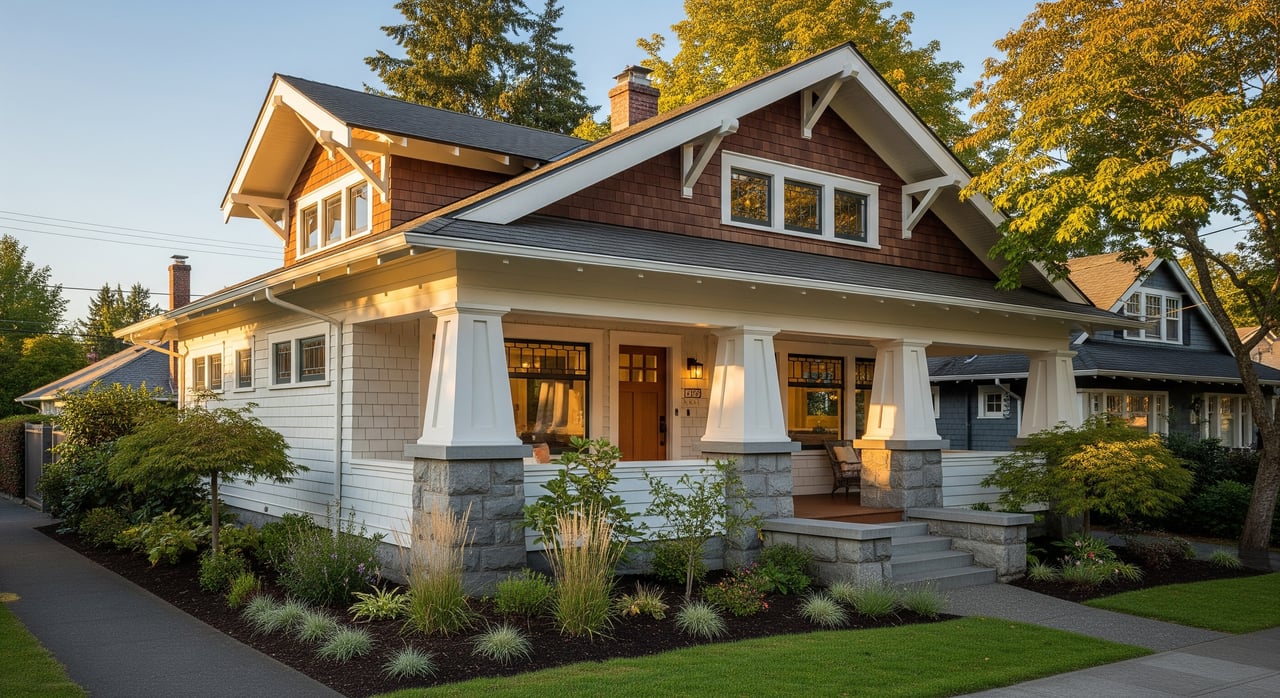
Thinking about selling your Wallingford Craftsman and unsure what it’s really worth? You’re not alone. These early 1900s homes blend character and modern living in ways that make pricing both rewarding and tricky. In this guide, you’ll learn how to evaluate original details, weigh permitted updates, account for basements and parking, and choose the right comps so you can list with confidence and minimize appraisal risk. Let’s dive in.
Key value drivers in Wallingford
Original features and condition
Intact Craftsman details can move the needle. Buyers often respond to built-in cabinetry, fir floors, leaded glass, original doors and hardware, and period fireplaces. If your home retains high-quality millwork or quarter-sawn wood, treat those as a positive condition factor against similar homes that have been stripped or poorly altered. Balance this with the reality that some buyers prioritize modern kitchens and baths. Your pricing should reflect which buyer pool is most active at your price point.
Permitted updates vs unpermitted work
Permitted remodels increase marketability and appraised value because lenders and appraisers can verify the work. Kitchens, baths, system upgrades, and any structural changes should have clear permit records and final inspections. Unpermitted work often forces downward adjustments or buyer credits. Some lenders exclude non-permitted finished area entirely from gross living area, which can create appraisal gaps. Confirm your permit history through City of Seattle permitting records and King County parcel files before setting a price.
Basement usability and what counts
Basements are common in Wallingford, but they do not all count the same. Ceiling height, egress, moisture, finish level, and whether the space is permitted all matter. Many appraisals value finished basements at a lower rate per square foot than above-grade space. A practical guideline is to treat legal, usable finished basement area at a fraction of main-floor value, often in the 50 to 75 percent range, then confirm with nearby paired sales. Non-permitted finished space is typically discounted until legalized.
Parking and access
Off-street parking can be a real differentiator on narrow, historic blocks. A detached garage, covered carport, or long driveway usually prices higher than homes that rely on street parking. If you plan to add parking, check local right-of-way and curb-cut rules first. On-site, legal parking is a meaningful convenience factor for many buyers and should be accounted for in comps.
Lot, alley, and ADU potential
Lot width, depth, slope, and rear alley access can influence both day-to-day living and expansion potential. Seattle has encouraged accessory dwelling units in recent years, but specifics vary by zoning, lot coverage, setbacks, height, drainage, and utility connections. If your lot can support an attached or detached ADU, you may be able to capture added value using sales of nearby homes with permitted ADUs, or by estimating potential rent and translating that into value using an income approach. Accurately presenting ADU potential can widen your buyer pool to include investors and multi-generational buyers.
Micro-location and block factors
Wallingford value often shifts block by block. Tree-lined streets, proximity to parks and retail corridors, and access to transit can support higher prices. Homes near busy arterials or commercial pockets may require downward adjustments. When selecting comps, prioritize similar street character and immediate micro-location to avoid over- or underpricing.
How to choose the right comps
Start with tight geography and time
- Begin within 0.25 to 0.5 miles, favoring the same blockface when you can.
- Use sales from the last 3 to 6 months. If volume is thin, expand to 9 to 12 months and apply time adjustments for market drift.
- Keep eras consistent. Focus on homes built roughly 1905 to 1930 so construction styles and layouts align.
Filter for key attributes
- Gross living area within about 15 to 25 percent of your home.
- Bedroom and bathroom counts, especially when beds and baths are on different levels.
- Basement finish and legality, lot size and topography, and parking type.
- Condition cohorts. Separate original or lightly updated homes from fully renovated or expanded homes so you can adjust cleanly between groups.
Prioritize permitted, comparable sales
Use permitted renovated homes as your primary set. If you must include a comp with unpermitted work, apply conservative downward adjustments and make the risk explicit. Keep a clear notes column for permit status so your story holds up with buyers, appraisers, and lenders.
Make thoughtful adjustments
Adjustment order of operations
- Quality and condition, including intact original features
- Above-grade gross living area
- Basement finish and usability
- Bed and bath count and level
- Lot size and usable outdoor space
- Parking type and availability
- Micro-location influences
Quantify with paired sales
Look for two nearby sales that differ by just one feature, like one with a garage and one without. Use the price difference to guide your adjustment for that feature. If you lack perfect pairs, blend local price-per-square-foot patterns with conservative multipliers for basements, parking, and lot attributes. Treat above-grade area as the primary value driver, and apply a lower per-square-foot rate to finished basement space based on quality and legality.
Build a data-backed price range
- Compile 6 to 12 recently sold comps and 4 to 8 active or pending listings.
- Normalize square footage. Document what counts as above-grade gross living area versus finished basement.
- Tabulate price, price per square foot, basement area, lot size, parking, permit status, and days since sale.
- Adjust each comp in the priority order above. Keep your math and notes transparent.
- Reconcile to a value range with a weighted average or median that fits your home’s condition and buyer pool.
- Set a listing strategy that aligns with inventory, absorption, and sale-to-list patterns in the immediate area.
Pre-listing checklist for Craftsman sellers
- Pull recent solds and current actives within 0.5 miles and 6 months. Expand the window only if needed and time-adjust older sales.
- Confirm recorded gross living area, lot size, and building sketch in King County parcel records.
- Run a complete permit history for kitchens, baths, systems, structural changes, and any ADU work. Verify that permits have passed final inspection.
- Verify basement legality. Measure ceiling height, confirm egress, and note separate entrances. If space is not permitted, get a bid to legalize or plan a disclosure strategy.
- Check local rules for residential parking zones and curb-cut feasibility if you are considering adding a driveway or garage.
- Conduct paired-sales analysis for the impact of parking, basements, and ADUs on sale price.
- If ADU potential exists, gather market rent comps to model income-based value.
- Order a pre-listing inspection or specialized inspections for roof, HVAC, and sewer to reduce surprises and price with clarity.
- Prepare a photo inventory highlighting original features and permitted upgrades. Document non-permitted areas clearly.
- Create three price scenarios—aggressive, market, conservative—tied to your comp set and adjustment notes.
Red flags that affect appraisals
Open permits and incomplete finals
Permits without final inspections can slow or jeopardize closing and may trigger lender conditions. Resolve these before listing or price in the risk.
How basements impact loans
Some lenders exclude below-grade finished space from gross living area for valuation. If your basement space is a big part of the story, anchor price to sales with similar basements and be explicit in your listing about legal status and features like egress.
ADU rules and feasibility
ADU potential can be a value driver but only if it is feasible under current rules. Confirm setbacks, height, lot coverage, and utility capacity. Be precise in your listing narrative so you do not overpromise or trigger appraisal concerns.
Historic and exterior changes
If your home is a designated landmark, exterior modifications may require review. That can limit expansion plans and affect certain buyers’ timelines. Confirm any status before pricing an addition into your value.
Right-of-way and parking limits
Curb cuts and new driveways may require approvals and can be infeasible on narrow lots. Avoid assuming that adding parking is simple. Validate feasibility before assigning value to future parking.
Older-home hazards
Lead paint, knob-and-tube wiring, asbestos, and older gas plumbing are common in homes from this era. Price in likely remediation costs or plan for credits if inspection findings surface during the listing period.
Pricing scenarios that work
Aggressive launch
Use this when inventory is scarce and your comps show rising sale-to-list ratios. Price at the lower end of your adjusted value range, create strong early traffic, and aim for multiple offers that pull the price to the top of the range.
Market-aligned
List near the middle of your adjusted range when activity is balanced. This helps you attract qualified buyers without leaving money on the table. Keep your adjustment notes ready to support the price with appraisers.
Conservative cushion
If the market is soft or your home has unresolved permit or condition items, start near the lower end of the range. This can shorten days on market and reduce the odds of a price cut later.
Align price to likely buyers
Preservation-minded buyers
These buyers value intact Craftsman details and quality woodwork. Lean into professional photography and staging that highlights original features. Weight comps with similar character more heavily.
Move-up families
They prioritize functional space, additional bedrooms, and usable basements. Put clear emphasis on legal, well-finished lower levels, storage, and yard usability.
Investors and builders
They focus on lot efficiency, ADU potential, and the cost-to-improve story. If your property can support an ADU, include a simple rent-based value estimate and comparison sales with permitted ADUs.
Downsizers and young professionals
They want updated kitchens, efficient layouts, and access to amenities. If your home has recent permitted renovations, anchor price with renovated comps and make permit documentation easy to review.
Ready to price with confidence?
A Wallingford Craftsman deserves a pricing plan that respects its character and the realities of today’s market. If you want a clear, data-backed range and a launch strategy that attracts the right buyers, we can help. Reach out to schedule a neighborhood-specific valuation and a tailored marketing plan with Ken Graff.
FAQs
How do appraisers treat a finished basement in Wallingford?
- Many appraisers value finished basements at a lower rate than above-grade space and may exclude below-grade area from gross living area, so price with a discounted per-square-foot assumption and confirm with local paired sales.
Do original Craftsman details increase sale price?
- Intact period features like built-ins, fir floors, and leaded glass often support positive condition adjustments compared to similar homes with removed or poorly altered details.
How much does off-street parking matter in Wallingford?
- On-site parking is a meaningful convenience on narrow streets and can justify upward adjustments over similar homes that rely on street parking.
How should I value ADU potential on my lot?
- Use sales of homes with permitted ADUs when available or estimate market rent and translate it to value using an income approach, while confirming feasibility under current rules.
Which permits should I gather before listing a 1910s Craftsman?
- Collect permits and finals for kitchens, baths, structural work, electrical, plumbing, HVAC, and any basement finish or ADU work, plus warranties for major systems.
How far back should I look for comparable sales in Wallingford?
- Aim for 3 to 6 months; expand to 9 to 12 months only if necessary and apply time adjustments for market changes.