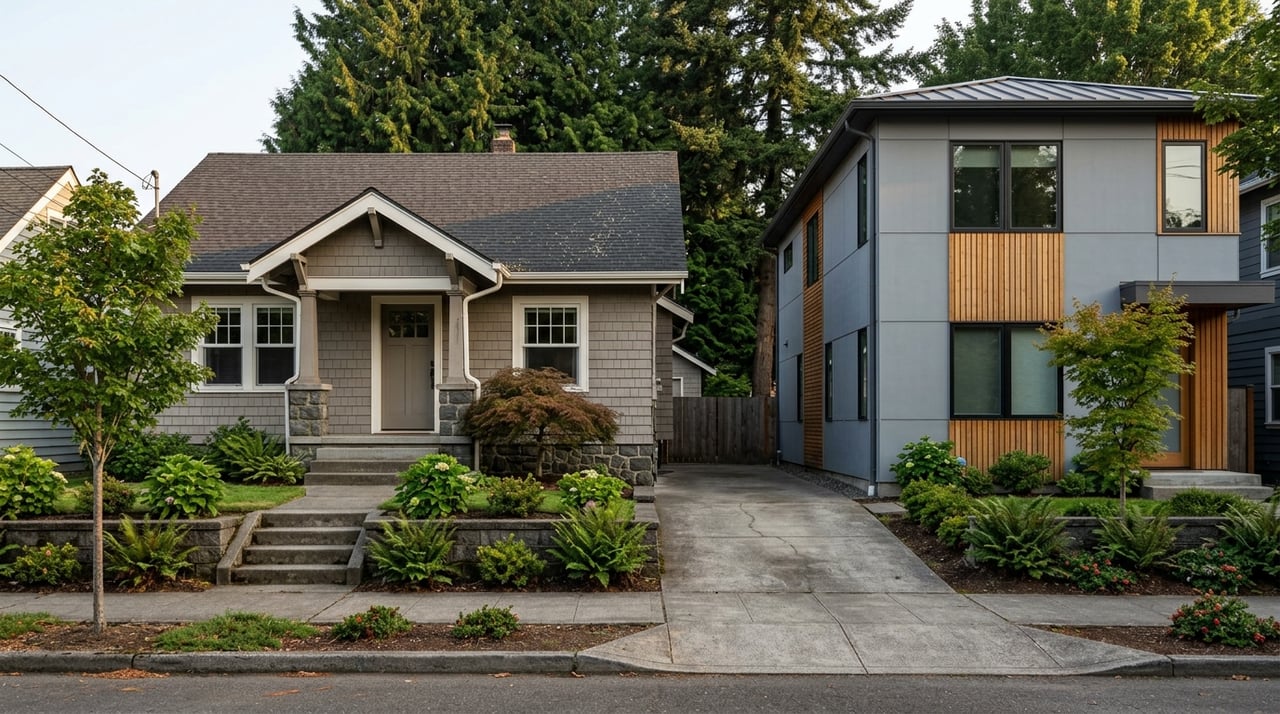
Trying to choose between Phinney Ridge and Ballard for a single-family home? You are not alone. Both neighborhoods are well-known Seattle options, but they deliver very different day-to-day experiences once you look past the headline prices. If you want to compare character, lot size, market pace, and lifestyle fit, this guide will help you narrow the field. Let’s dive in.
Phinney Ridge vs Ballard at a Glance
If you are buying a detached home, the biggest difference is not simply price. It is the feel of the housing stock, the pace of the market, and what your daily routine may look like once you move in.
Phinney Ridge tends to appeal to buyers who want older character homes and a more established residential setting. Ballard tends to appeal to buyers who want a more urban rhythm, stronger bike access, and a broader mix of home styles and amenities.
Here is the quick read:
- Choose Phinney Ridge first if you want early-20th-century character, a Craftsman-heavy feel, and a more residential streetscape.
- Choose Ballard first if you want more dining density, stronger bikeability, and a livelier block-by-block experience.
- Do not assume Ballard always means much larger lots or much lower detached-home pricing. The lot-size difference is small, and the pricing gap can narrow when you compare similar single-family homes.
Home Prices and Market Speed
Phinney Ridge is currently the pricier and faster-moving market based on recent neighborhood data across all home types. The latest snapshot shows a median sale price of about $1,324,554, up 2.9% year over year, with a median of 6 days on market.
Ballard’s latest all-home median is about $889,551, down 3.8% year over year, with homes spending a median of 12 days on market. Ballard is still competitive, but the pace appears less aggressive in the current snapshot.
For buyers, that means Phinney Ridge may require faster decisions and cleaner offer strategy when the right house comes up. The latest data also shows Phinney Ridge with a 108.1% sale-to-list ratio and 63.3% of homes selling above list price, compared with Ballard at 102.5% and 39.3% above list.
Why the Price Gap Can Be Misleading
There is an important caveat for single-family buyers. These neighborhood median prices include all home types, and Ballard has a larger mix of condos and townhomes than Phinney Ridge.
That broader housing mix can pull Ballard’s headline median lower. When you isolate detached homes by condition, block, and exact location, the difference between Phinney Ridge and Ballard may be smaller than the top-line numbers suggest.
Housing Stock and Architectural Feel
If home character matters to you, this is where the comparison becomes clearer.
Phinney Ridge, using the closest assessor-area proxy, is one of Seattle’s earlier-developed areas. About 67% of single-family homes were built before 1930, which helps explain the neighborhood’s established feel and strong connection to older Seattle housing patterns.
Ballard also has historic housing stock, but it is more mixed. In West Ballard, about 41% of homes were built before 1930, and the area includes much more recent townhome development alongside older detached homes.
Phinney Ridge: Older Seattle Character
Phinney Ridge tends to read as classic early Seattle. Typical detached homes in the area proxy are about 1,760 square feet, and the neighborhood is widely associated with Craftsman and bungalow-style houses.
For many buyers, that translates into a more consistent architectural identity from one block to the next. If you picture a classic Seattle single-family home with older details and established streets, Phinney Ridge often fits that image.
Another detail worth noting is that about 21% of properties in the area proxy have a view amenity. That does not guarantee a view on any specific home, but it does point to a neighborhood where topography can play a meaningful role in the buying process.
Ballard: More Variety, More Infill
Ballard offers a broader architectural mix. City historical information notes styles that include Victorian, vernacular, Craftsman, American Foursquare, Colonial Revival, Tudor Revival, Minimal Traditional, and Ranch.
That variety can be a real plus if you want more options in style and age. At the same time, Ballard has seen significant townhome construction, including more than 1,000 townhomes built in West Ballard since 2015, which contributes to a more varied and denser feel in some pockets.
For a single-family buyer, Ballard often feels more changeable block by block. One street may lean traditional and detached, while another may show much more recent infill activity.
Lot Size: Closer Than Many Buyers Expect
A lot of buyers assume Ballard or Phinney Ridge will clearly win on yard space. In reality, the numbers are very close.
The typical lot in the Phinney Ridge area proxy is about 4,028 square feet. In West Ballard, the typical lot is about 4,040 square feet.
That is a very small difference. If yard size is high on your priority list, you will usually get more value by comparing specific properties and micro-locations rather than choosing one neighborhood over the other based on lot size alone.
Walkability, Transit, and Daily Routine
Both neighborhoods support an active Seattle lifestyle, but Ballard has the stronger mobility scores on paper. Ballard posts a 90 Walk Score, 52 Transit Score, and 91 Bike Score, while Phinney Ridge comes in at 84, 50, and 79.
That does not make Phinney Ridge inconvenient. It does suggest that Ballard generally offers a denser and more bike-friendly urban experience, while Phinney Ridge feels somewhat more residential in day-to-day use.
Commuting Options
Both neighborhoods have direct bus access to downtown Seattle. Phinney Ridge is served by King County Metro Route 5 through Greenwood and into Downtown Seattle.
Ballard benefits from the RapidRide D Line, which connects Crown Hill, Ballard, Interbay, Uptown, and Downtown Seattle. If transit convenience and frequency are major priorities, Ballard may have the edge for some buyers.
Amenities and Lifestyle Fit
Lifestyle often becomes the deciding factor once buyers realize the lot sizes are similar and the detached-home pricing gap may not be as dramatic as expected.
Phinney Ridge centers more around neighborhood-scale amenities. Buyers are often drawn to Greenwood Avenue, Woodland Park Zoo, Green Lake access, the Phinney Neighborhood Association, and a smaller restaurant and retail rhythm.
Ballard offers a larger destination cluster. Its amenities include the Ballard Avenue area, the Ballard Farmers Market, Ballard Locks, Golden Gardens, and the Nordic Museum.
What Daily Life May Feel Like
If you want a quieter residential texture with strong character-home appeal, Phinney Ridge may feel more aligned with your goals. If you want more activity, more dining concentration, and a stronger urban pulse, Ballard may be the better fit.
This is often the real decision point for single-family buyers. The choice is less about yard size and more about whether you want residential continuity or a busier, more mixed neighborhood pattern.
Which Neighborhood Fits Your Priorities?
Here is a practical way to frame the decision.
Choose Phinney Ridge if you want:
- A stronger concentration of older single-family homes
- A neighborhood known for Craftsman and bungalow character
- A more established residential feel
- A faster-moving market with tight competition
- A chance at view-oriented properties in some locations
Choose Ballard if you want:
- More walkable dining and destination amenities
- Stronger bikeability and a denser urban layout
- More variety in house age and architectural style
- A market that may offer a slightly longer decision window
- A neighborhood with more block-by-block variation
A Smart Way to Compare Homes in Both Areas
If you are serious about buying in either neighborhood, avoid relying only on broad neighborhood medians. Instead, compare detached homes by age, condition, lot utility, updates, street feel, and access to the amenities that matter most to you.
That is especially important here because assessor boundaries do not perfectly match neighborhood names, and the published market stats are not single-family-only figures. In a comparison like Phinney Ridge versus Ballard, the right house on the right block can matter more than the neighborhood headline.
When you are weighing two strong Seattle neighborhoods, local context makes a real difference. If you want help narrowing your search, evaluating value, or crafting a competitive offer strategy, Ken Graff can help you buy with more clarity and confidence.
FAQs
Is Phinney Ridge more expensive than Ballard for single-family buyers?
- On recent all-home-type data, yes. Phinney Ridge shows a higher median sale price than Ballard, but the gap can narrow when you compare detached homes with similar condition and location.
Are lot sizes bigger in Ballard or Phinney Ridge?
- The difference is minimal in the available assessor-area data. Typical lots are about 4,028 square feet in the Phinney Ridge proxy and about 4,040 square feet in West Ballard.
Does Phinney Ridge have more older homes than Ballard?
- Yes. The closest assessor-area data shows about 67% of single-family homes in the Phinney Ridge proxy were built before 1930, compared with about 41% in West Ballard.
Is Ballard better for walking and biking than Phinney Ridge?
- Based on current transportation scores, Ballard has the edge. It posts higher Walk Score and Bike Score numbers than Phinney Ridge.
Which neighborhood feels more residential for Seattle single-family buyers?
- Phinney Ridge generally reads as more residential and more consistent in its older single-family character, while Ballard tends to feel more mixed and urban block by block.